

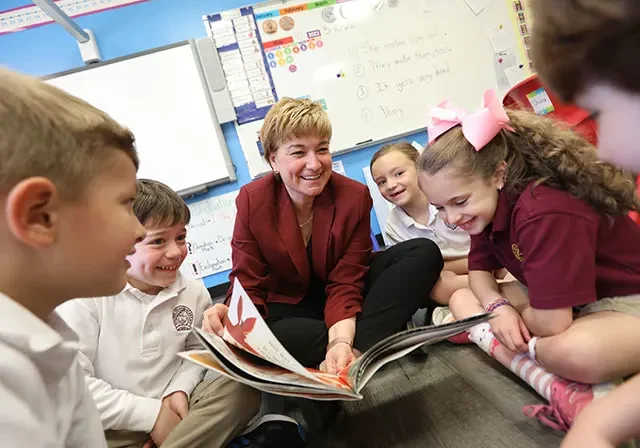
At Staten Island Academy, we know how important it is to create a learning environment that empowers both students and educators to perform at their best. One of the ways we seek to bring out the best in our students is through small class sizes of around 15 students – a number significantly lower than 24, the average class size in New York. We understand that maintaining small class sizes requires more resources and a greater investment of time, but the benefits are clear in terms of student achievement, student well-being, and overall school culture.
Individualized Instruction
Small class sizes facilitate closer relationships between students and educators. Educators have more opportunities to identify individual students’ strengths, interests, and learning styles taking time to establish clear goals and objectives. In a small group setting, students are more likely to ask questions, contribute to the discussion, and share ideas and perspectives. This dynamic creates a positive feedback cycle that offers even more opportunities for tailored, individualized learning.
Peer-Group Collaboration
In small-group settings, each class becomes a community. Students can share, contribute, and collaborate, which in turn creates strong, long-lasting relationships in and out of the classroom. Small class sizes also make it easier for classes to break up into pairs or smaller groups to work on problems or presentations together. Joint problem-solving develops collaborative working and leadership skills that students can implement in all areas of their lives throughout and beyond their time at the Academy. Research also shows that small-group learning leads to improved academic learning, better relationships, and heightened overall well-being.
Hands-On Working
Large group settings, by their nature, prioritize lectures and presentations and tend to create a “one-way” flow of information. However, smaller groups foster the conditions for a variety of learning experiences. Student-led presentations, non-traditional seating, demonstrations and performances, outdoor learning, and applied, hands-on tasks are just some of the ways educators can elevate the classroom experience when working in a small-group setting.
Improved Outcomes
Teachers are also strong proponents of small class sizes, noting that smaller classes make it easier to prepare for classes, teach, and grade student papers. With more time to focus on individual students, more opportunities for peer support, and more freedom for teachers to adjust and tailor learning in response to student needs and feedback, minimal classes deliver improved outcomes for both students and teachers.
See the Small-Class Difference at Staten Island Academy
Staten Island Academy works to cultivate the best possible environment for learning and individual growth. Small-class settings encourage collaboration, participation, engagement, and communication – all of which help shape our students into well-rounded leaders today and tomorrow. To see our classes in action, contact us today about a tour!